Get my Newsletter (it‘s free!)
Join my mailing list and be the first to get updates about new Journal entries, my photography projects, and more!
A Weekend with Phil Penman in Zürich
Walking Familiar Streets with New Eyes
Last weekend, I had the opportunity to take part in a photography master class with the renowned street photographer Phil Penman. It was a great experience and a rare chance to learn from him in a very practical and hands-on way.
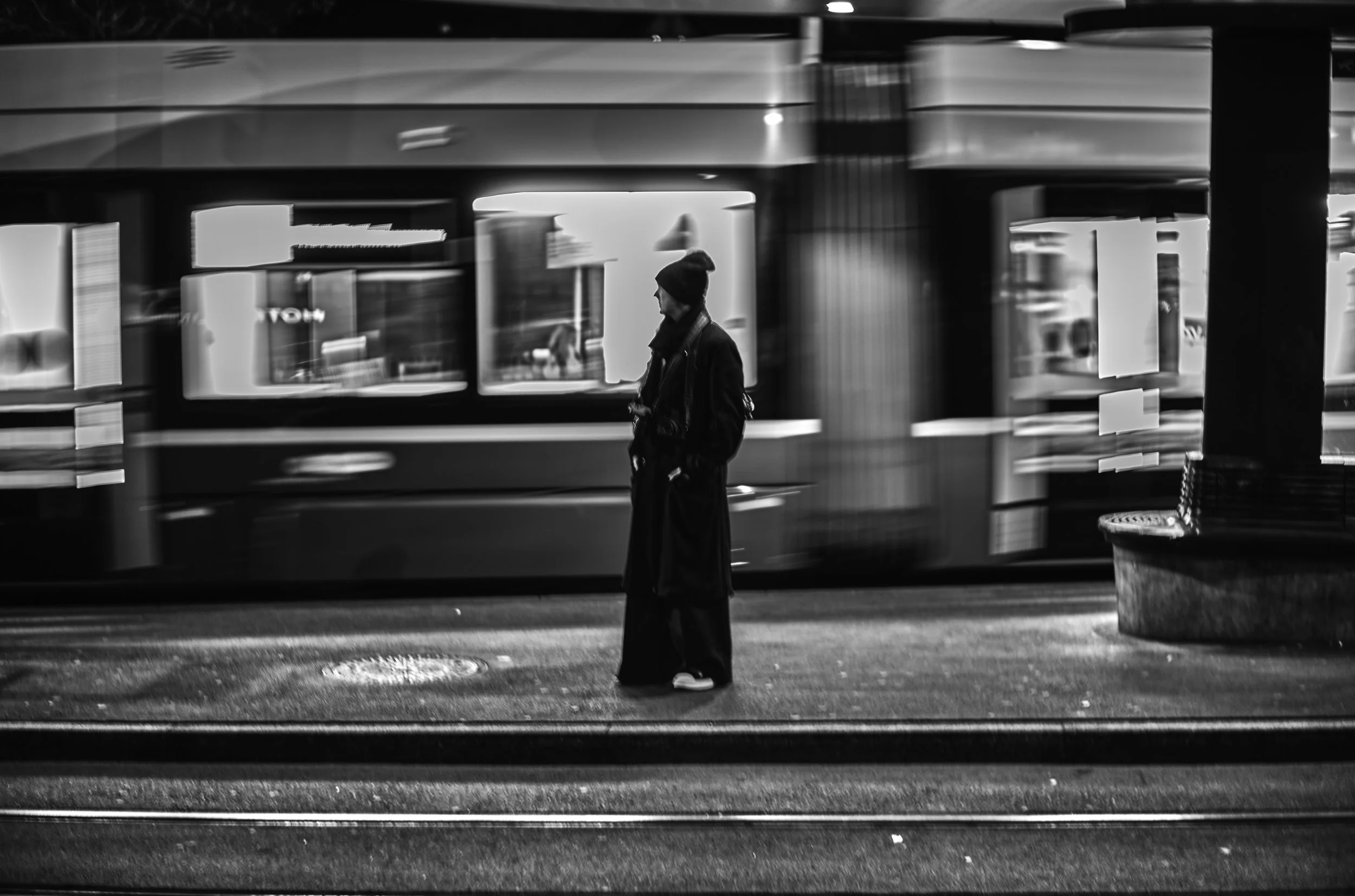
We spent our days walking through the streets of Zürich - places I know well and pass through regularly. Still, seeing them through Phil’s eyes changed a lot for me. He showed us how to observe more carefully and notice small moments that are easy to miss. Light, shadows, and especially timing suddenly became much more important.
Phil in Zurich
What made the weekend especially valuable was watching Phil work in real time. Seeing how he anticipates moments, how quickly and decisively he reacts when they appear, and how he constantly moves to find the best possible composition was a master class in itself. He strongly focused on composition and often reminded us that great images rarely come from standing still. His message was clear and memorable: “Don’t be lazy.” If you want the right frame, you have to move, change angles, and work the scene.
Phil’s feedback was direct, practical, and clearly shaped by many years of experience. While he did talk about camera settings and lens choices when needed, the main focus was always on intent, storytelling, and trusting your instincts. The camera was a tool—the image and its meaning came first.
Beyond technique, Phil shared many insights about mindset. He spoke about always being ready, because a moment will most likely never happen again. He explained how to approach a scene and how to stay curious, even in places you think you already know well. What stood out to me was how kind, open, and approachable he is. Despite his reputation and experience, he is the opposite of arrogant—always willing to help, encourage, and share honestly.
Spending a weekend learning from Phil was motivating, inspiring, and grounding. It was a strong reminder that even in the most familiar places, there are still countless stories waiting to be seen.
About Phil Penman
Phil Penman is a British-born street photographer based in New York. He is best known for his powerful black-and-white images of city life. Before focusing on street photography, he worked in different areas of photography, starting out as a press photographer. This background has clearly influenced his work, which often feels intense, dynamic, and full of energy. Phil’s work has been shown in exhibitions around the world, and he regularly teaches workshops and master classes.
Trying the new Ricoh GR4
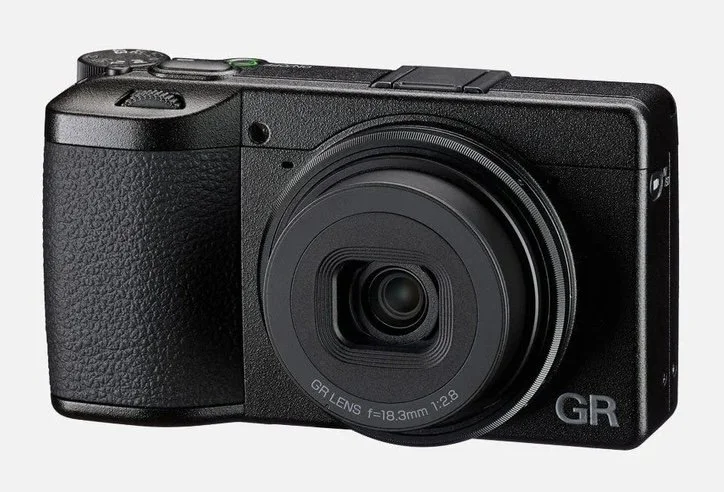
Today I had the opportunity to test the new Ricoh GR4. No doubt it is a good camera, it takes good images and most importantly, it is small. Very small. It fits into a jeans pocket.
But also, it is not my camera. My Leica Q2 Monochrom is not a big camera, but it i feels huge compared to the GR4. I had it with me and could compare directly. The Leica is heavy, but not too heavy to hold it in your hand for a couple of hours. Most importantly, it somehow inspires me to take good and unusual photographs. The Ricoh doesn’t do any of that. Okay, price wise both are not comparable. But now I know that I will never use a different brand ever again.
Instagram Isn’t Great for Photographs
It’s a bit ironic: Instagram was built around photography, yet it’s not a very good place to look at photographs.
Over the years, the platform has shifted its focus from still images to short videos, stories, and endless reels. Photos are compressed, cropped, and squeezed into a format that rarely does them justice. The experience is fast, noisy, and driven by algorithms that reward attention rather than appreciation.
As photographers, we spend time thinking about light, composition, and meaning — the subtle details that can’t always compete with the quick, eye-catching visuals that fill a feed. A photo that invites reflection might get lost in the scroll, while something loud and flashy gets all the likes.
Many of us have started to look elsewhere. Some have built their own websites; others share their work on more photography-centered platforms like Flickr, Glass, 500px, or Foto App. These places may not have the same reach as Instagram, but they offer something more important: space to breathe, to look, and to connect with others who care about the craft of photography.
That’s also why I keep my own website — a quieter corner where I can show my work as I intended it, without compression or distraction.
If you have your own website or gallery outside of Instagram, please share it — I’d love to explore your photography and discover new work beyond the algorithm.
Photography deserves time, attention, and real connection — things that don’t always fit inside an app.
My first publication in print
A few weeks ago, I saw an Instagram story about Docu Magazine, a small photography magazine from Finland. I replied to the story and was surprised when, just a few days later, Tuomas Koskialho—the founder of Docu—got in touch with me. He asked if I would be interested in publishing some of my photos in a special edition. I said yes, and a few days later, I received an invitation to submit 20 of my photos.
This week, a package arrived with 20 copies of my special edition.
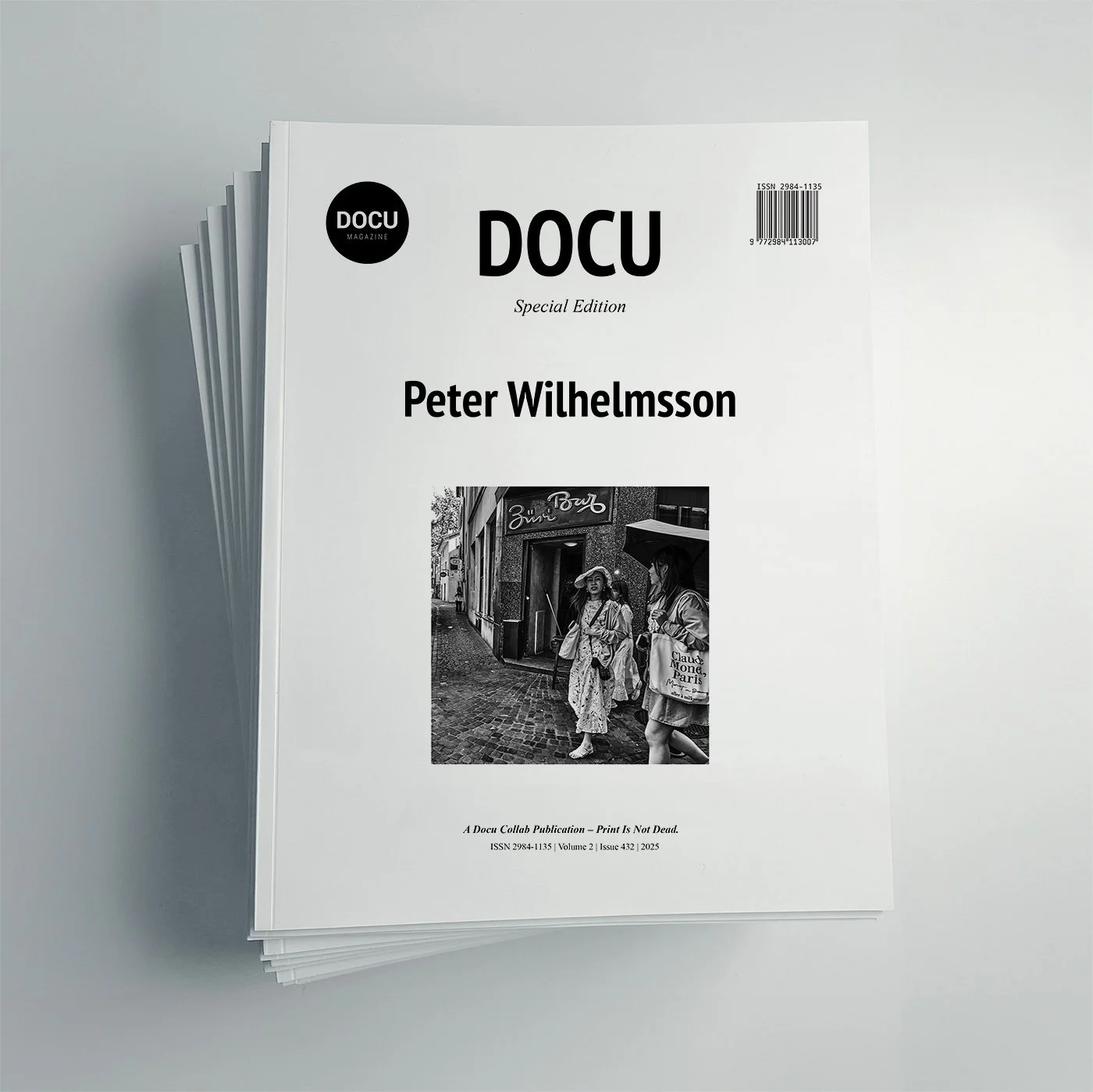
Seeing my own photos printed in a magazine, in beautiful quality and stylish design, is something special. Most of my photos I only know from looking at them on a computer screen. I’ve printed very few on photo paper. But a printed photo feels different. You look at it longer, notice more details, and let it affect you. That’s how it is with the photos in my Docu edition.
“Print is not dead” (Docu’s motto)
I’d be happy if you ordered your own copy of the special edition.